CHKD offers minimally invasive way to correct craniosynostosis
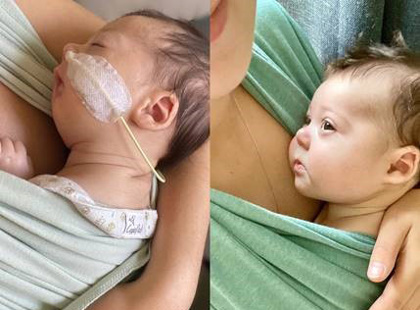
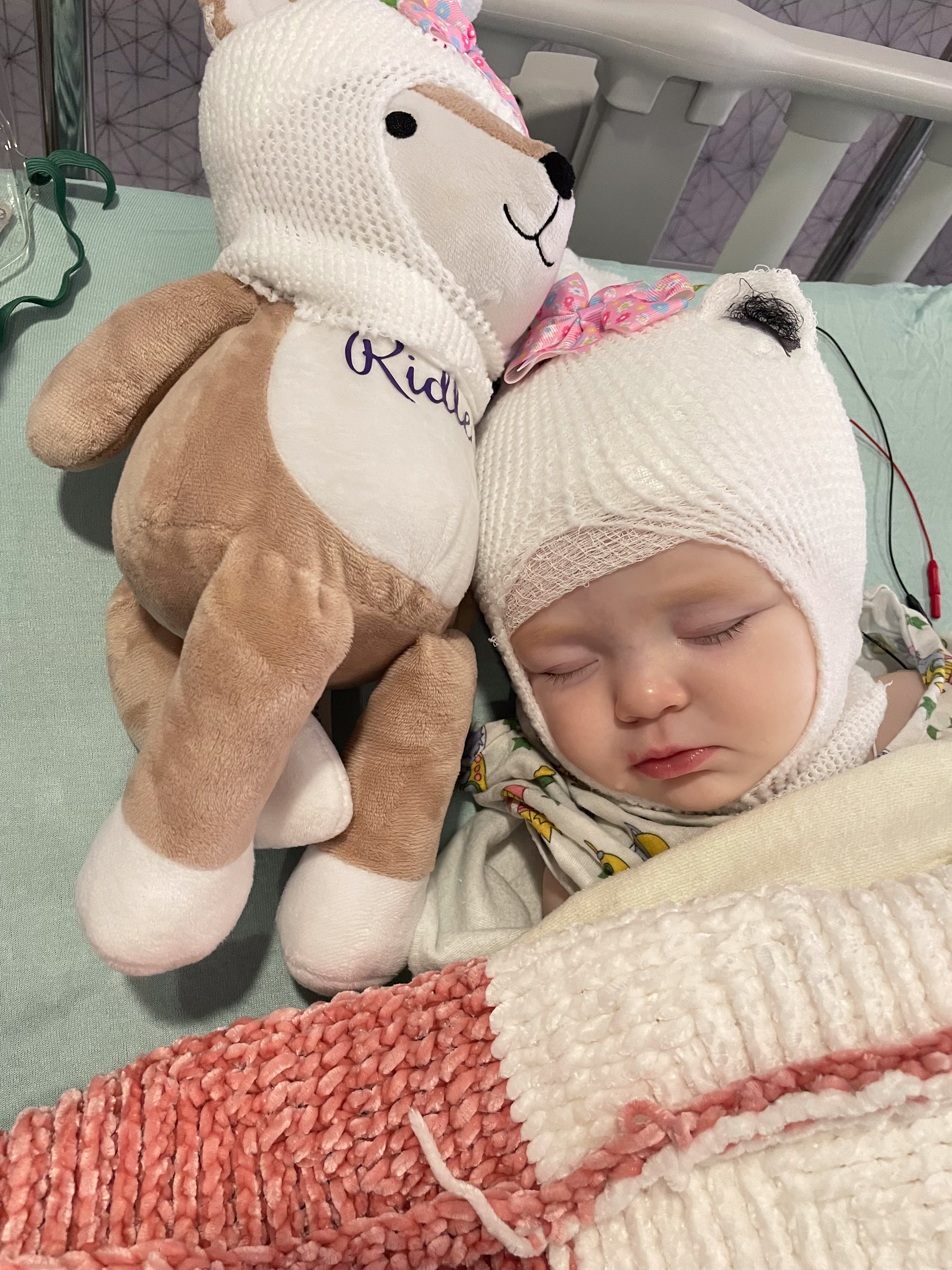
When Ridley Golom was born, her parents noticed that the shape of her head was unusual. They quickly learned she had a condition called sagittal craniosynostosis in which the bones at the top of her skull fused together too early. Left untreated, the condition could worsen the abnormal shape of her head and cause developmental delays because her brain wouldn’t have the room it needed to grow.
At just 11 days old, Ridley had her first appointment at CHKD’s Cleft and Craniofacial Center. Her parents were excited to learn that Ridley qualified for a minimally invasive surgery technique called cranial springs cranioplasty, which meant she could avoid open cranial vault surgery, an extensive procedure that would have required a lengthy hospital stay and waiting until she was older to be treated.
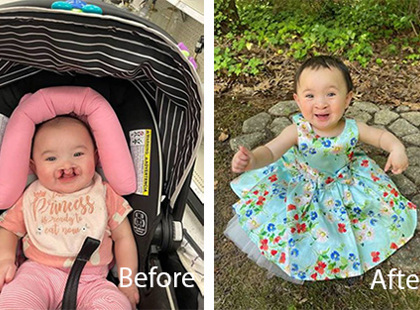
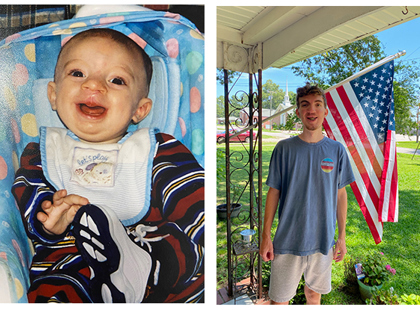
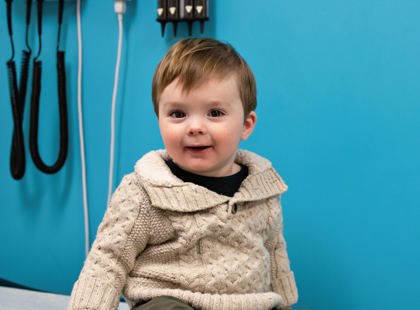
Cranial springs cranioplasty is the latest minimally invasive procedure to be offered at CHKD’s Cleft and Craniofacial Center. These types of techniques – now the standard of care across many surgical specialties – are helping children with craniofacial conditions receive treatment with smaller incisions, shorter hospital stays, and faster recovery times.
Under the expert direction of Dr. Jesus Gil Inciong, craniofacial surgeon and director of the center, Ridley became one of the first CHKD patients to undergo the cranial springs procedure.
“The advantage to using the cranial springs technique is that we can take care of the child sooner, especially if we’re able to diagnose them earlier,” says Dr. Inciong.
In a two-part process, Dr. Inciong and his team first removed the fused sagittal suture bone, which runs down the middle of the head from the top of the forehead to the back of the skull. Two cranial springs were placed into the gap. Over the next several weeks, the springs expanded, gently guiding Ridley’s skull to a more typical shape while allowing space for her growing brain. After six to eight weeks of expansion and stabilization, Ridley returned for a brief outpatient surgery to remove the springs.
Thanks to the minimally invasive approach, Ridley was able to spend the majority of her recovery at home with her family.
Now 18 months old, Ridley is thriving. She’s walking, playing with her older sister, and keeping up with the family’s dogs, Taz and Winnie.
“We had a great support system at CHKD,” says Ridley’s mom, Rebecca. “All the doctors and nurses were so informative and understanding. They made sure we prioritized ourselves, too, so we could give the best care to our child.”
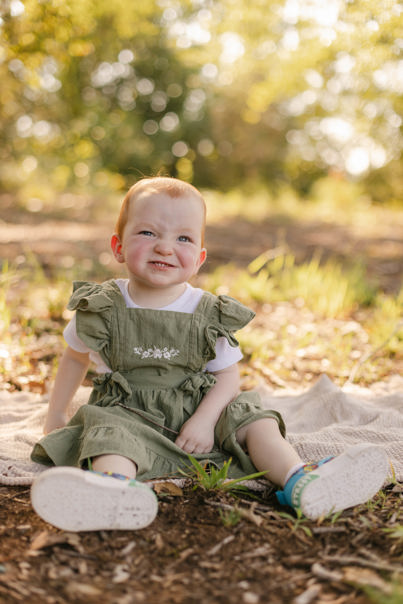
Published in CHKD's KidStuff Magazine, Fall 2025
Written by MaryClaire Hudson • Photograph above by Timeless Memories Photography by Kristen