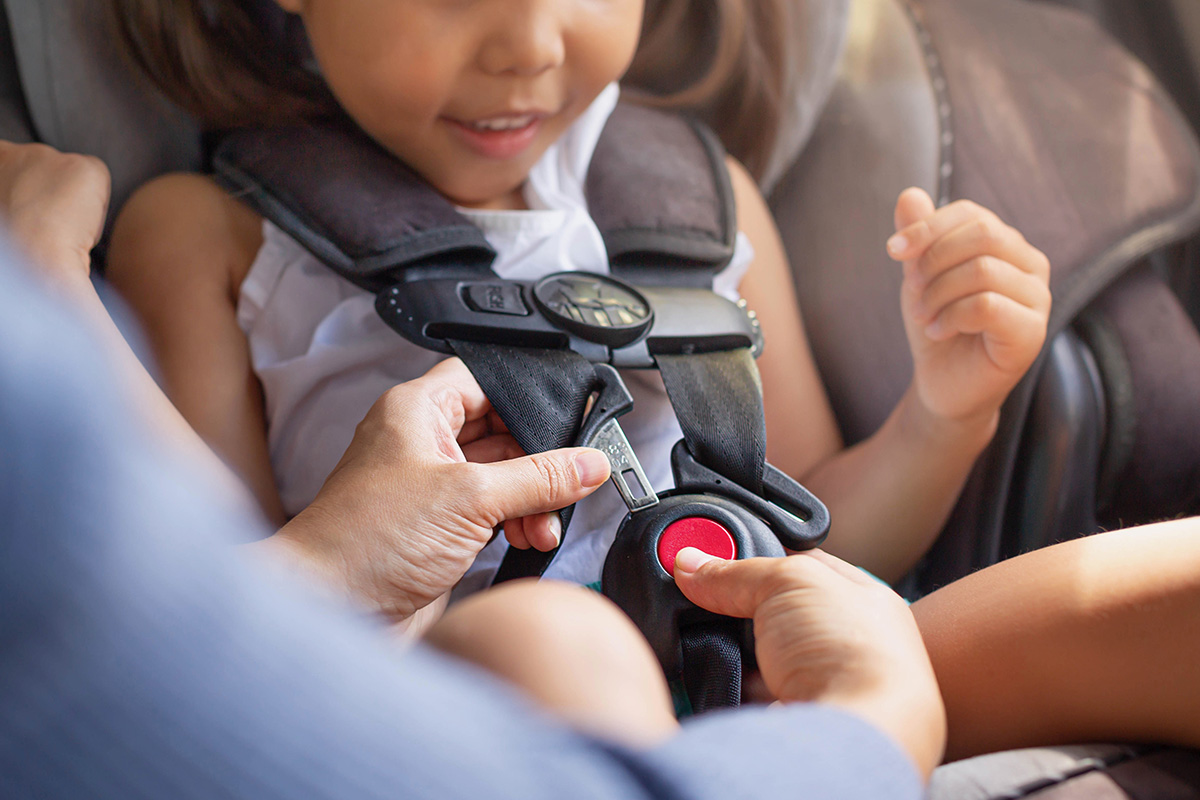
Your kids are going places — make sure they get there safely. Follow these four steps to car seat safety to keep your little one safe on the road.
Step 1: Rear-Facing – As Long As Possible
Infants must always ride rear-facing, which offers the best crash protection. Virginia law requires rear-facing until at least age 2, or until the child outgrows the seat’s limits.
- Use an infant-only or convertible seat that fits your child’s height and weight.
- The harness should be at or below the shoulders, with the chest clip at armpit level.
- Many convertible seats allow rear-facing up to 40–50 pounds — keep kids rear-facing as long as they fit.
Step 2: Forward-Facing with Harness
After outgrowing rear-facing, children can ride forward-facing in a harnessed seat.
- Harness should be at or above the shoulders, chest clip at armpit level.
- Keep kids in a five-point harness as long as possible — many seats accommodate up to 65 pounds.
- Special car seats are available for children with higher weight or special needs.
Step 3: Booster Seat
When a child outgrows a harnessed seat but isn’t tall enough for seat belts alone, use a booster.
- Boosters position the belt correctly across the lap and shoulder.
- High-back boosters add side impact protection and help shorter children fit better.
- Many models fit children up to 100–120 pounds.
Step 4: Seat Belts
Children can safely transition out of a booster when they can sit against the seat back with knees bent at the edge and feet flat on the floor.
- The belt should lie across the upper thighs and collarbone, never the stomach or neck.
- Most kids aren’t tall enough until age 10–12, even if they meet the minimum age and weight.
General Safety Tips
- Never remove a child from their seat while driving.
- Don’t use damaged, expired, or secondhand seats — or any seat involved in a crash.
- Do not alter your child’s car seat in any way. This includes adding any extra padding or positioning products that did not come with the seat.
- Harness straps should always lay flat and not twisted.
- Check for hot buckles in warm weather.
- Follow the manufacturer’s instructions for cleaning and installation.
- Car seats do expire. Check the bottom of the seat for an expiration date. If it’s not listed, assume the expiration is six years from the date of manufacture.
Visit CHKD.org/CarSeatSafety to learn more about CHKD’s car seat safety program.