By Dr. Rachel Mayer, MD, Liberty Pediatrics
The first few months with a newborn are full of discovery – learning what each cry means, setting a routine for rest and feedings, and finding your rhythm as a parent. Then, just when you think you have it figured out, your baby becomes fussier than usual, and your usual tricks don’t seem to help. Welcome to teething.
Most babies' teeth start to erupt between 6 and 10 months of age, although some may experience discomfort as early as 3 months. Teething symptoms can appear and disappear until all twenty baby teeth have emerged, usually by age 3.
Tackle teething discomfort with these tips:
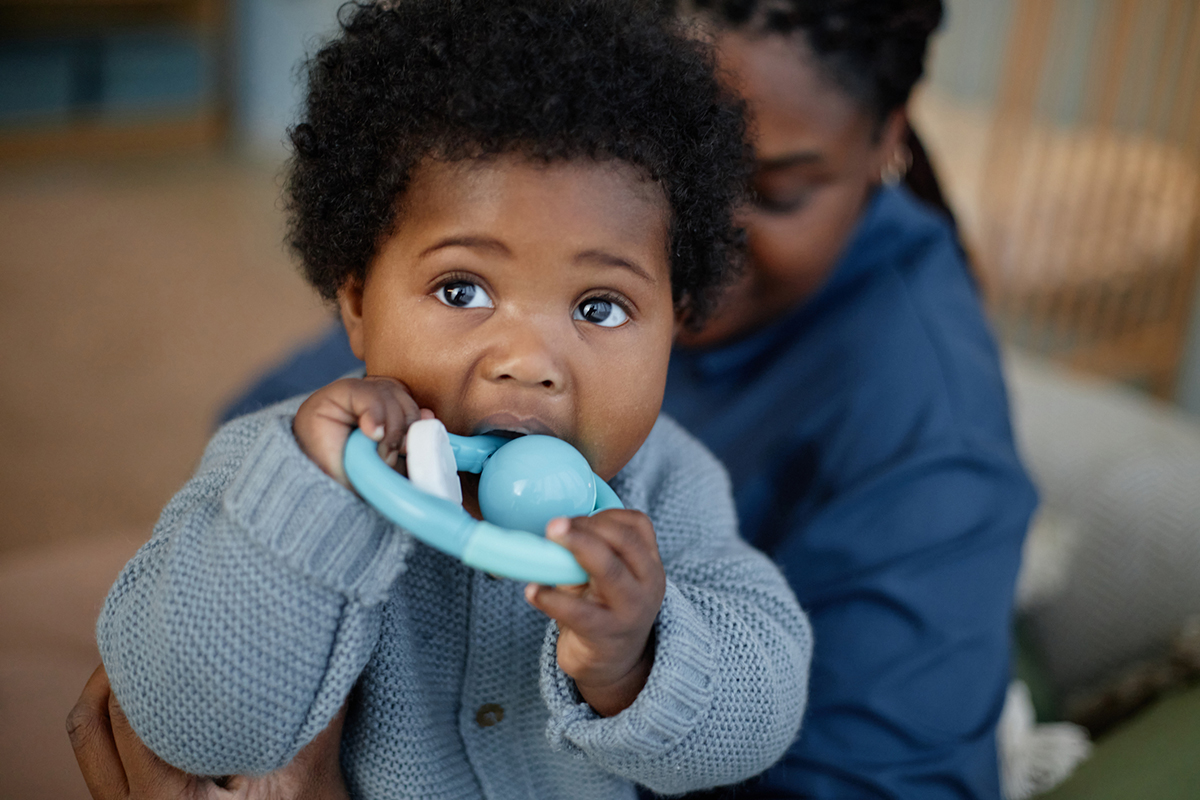
Invest in teething toys. Soft toys made from silicone or plastic can offer relief when your baby’s gums are sore. Some babies also prefer firm toys such as wood or harder plastic.
Offer simple, cool treats. Twist a damp cloth, pop it in the fridge, and let your baby chew on the cool, textured fabric. You can also find teething products that allow babies to safely enjoy the soothing sensation of cold fruit. However, don’t give them anything completely solid because that can be too harsh on sensitive gums. Also, avoid frozen items directly on the mouth or gums for prolonged times as this can lead to frostbite
For babies over 6 months, serve cold water in sippy cups with rubber spouts. The cool drink and chewable spout can both provide relief.
Gently massage your baby's gums. Using clean hands, softly rub your baby’s gums with your fingertip or knuckle. Many babies also find comfort in gently chewing on your finger.
Use pain medication (in moderation). Pain relief options like acetaminophen can be used in cases of extreme discomfort. Before giving your baby any pain medication, talk to your pediatrician about how to use it safely.
Some products marketed for teething relief – along with certain home remedies – can pose serious risks to infants. Avoid these types of products:
- Benzocaine (numbing) products.
- Lidocaine treatments.
- Alcohol of any kind.
- Homeopathic teething tablets or gels, especially those containing belladonna or coffea cruda.
- Liquid-filled teethers.
- Teething necklaces.
Teething can be tough for both you and your baby, but with the right strategies, it is manageable. When in doubt, check with your pediatrician, who can offer guidance specific to your baby’s needs.