By Dr. Kyzwana Caves, Adolescent Medicine
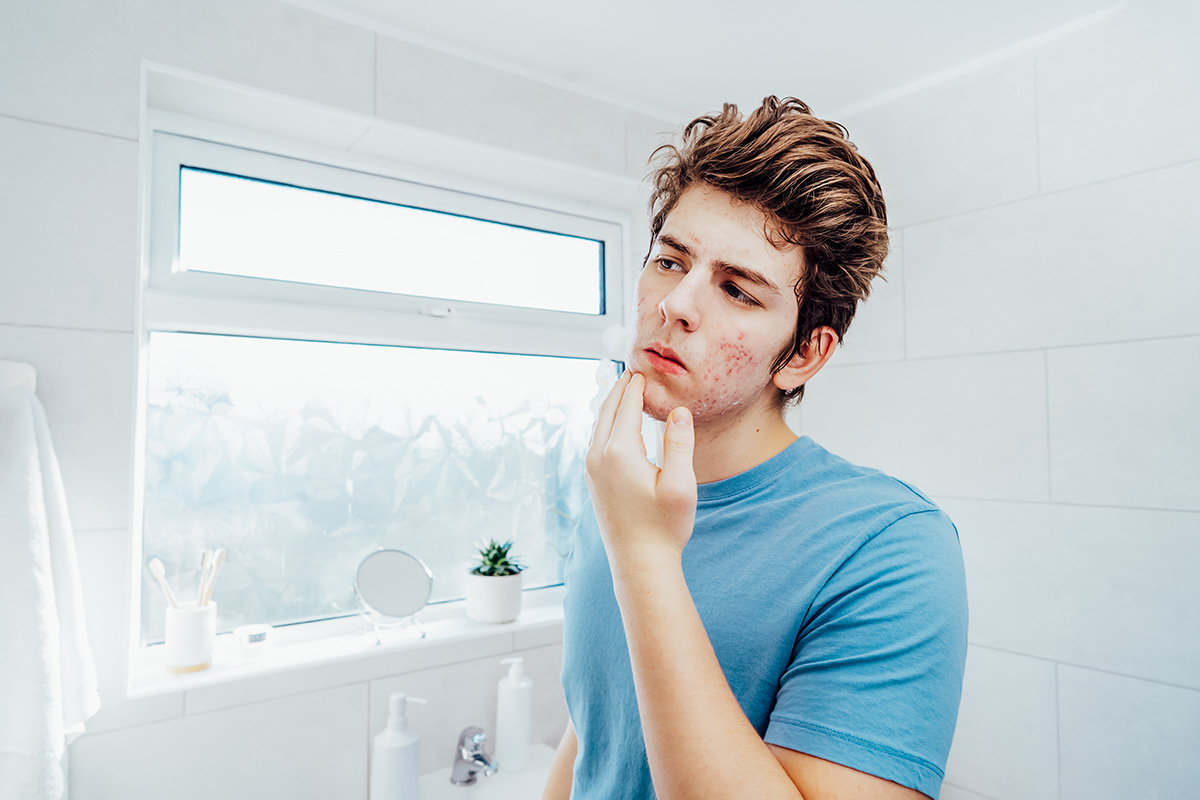
Most teens deal with acne, the most common skin disorder. It peaks during adolescence, and up to 80% of youth experience acne between ages 11 and 30. Learn what causes acne, how to prevent and treat it, and how to support your teen.
Teach your child about acne
- Acne is usually caused by clogged pores due to oil, bacteria, and dead skin. It can also be affected by hormonal changes (especially during puberty), using makeup or cosmetics, humidity and sweating, or taking certain medications.
- Teens should avoid touching or picking at problem areas of the skin. This can lead to infections and scarring.
- Avoid abrasive scrubs and excessive washing. These can irritate the skin. Try a gentle water-based cleanser and have your teen wash their face twice a day.
- Over-the-counter products containing benzoyl peroxide, topical retinoids, and salicylic acid can help treat acne. Pimple patches are also becoming more popular among teens.
- Showering regularly and increasing the frequency of hair washing can help reduce oil and acne around the face. If your child wears makeup, make sure they remove it before going to bed.
- Acne treatment takes time. Consistent treatment will have the best results.
Manage stress
- Stress can worsen your teen’s acne. Try to minimize stress in your teen’s life where you can.
- Be mindful of how often you remind your teen to use their acne treatment. This may backfire and cause teens to use their treatment less.
- Keep an eye on your child’s mental health when dealing with acne. Acne can lead to lower self-esteem and heightened risks of anxiety and depression.
Talk to a professional
If over-the-counter acne treatments are not working, consider making an appointment with an adolescent medicine specialist, who may prescribe additional treatment.