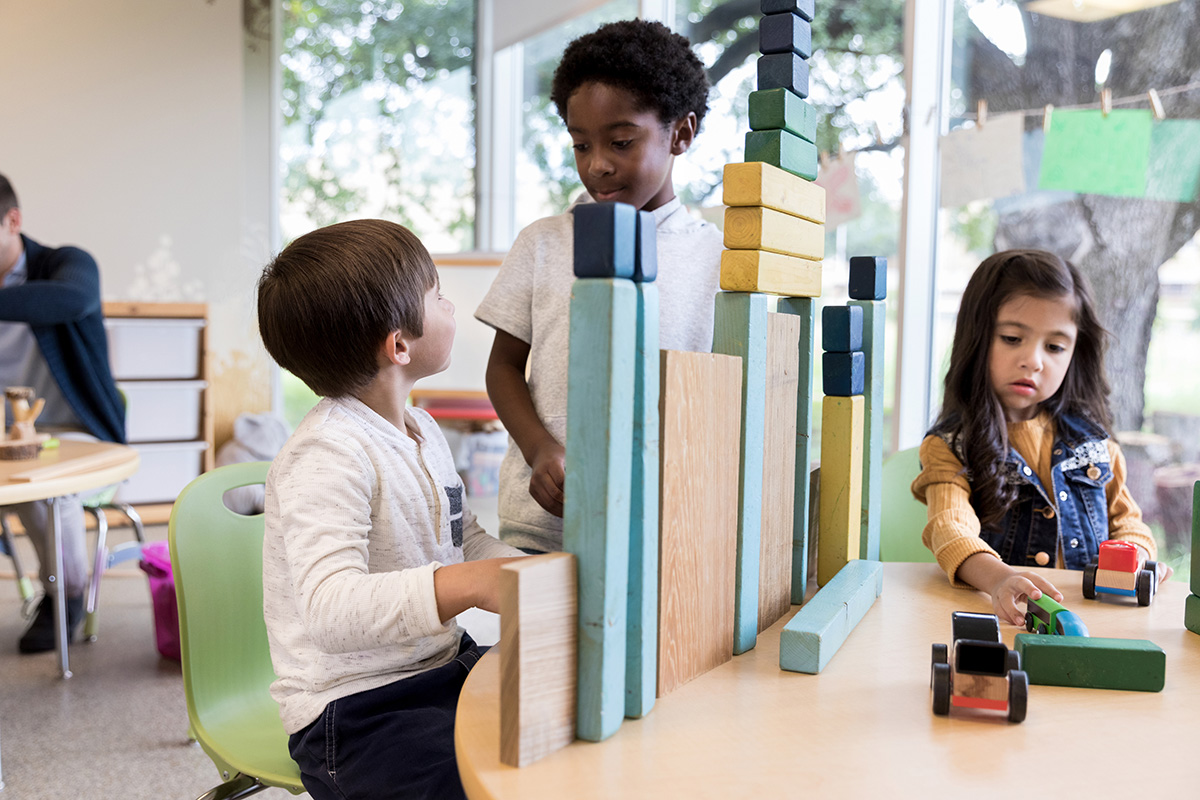
I took my 5-year-old grandson to the Children's Museum last week. He loves to play and build things. He especially loves to play with other children. There were several children of different ages in the Buildings Buddies exhibit. He asked a girl about his size, “How old are you?” She said, “Five” and held up her hand displaying four fingers and a thumb. He said, “I’m five, too.” That was it for the conversation. The new friends got in sync carting, tossing, stacking, and crashing blocks. They climbed and jumped and shared ideas and efforts. A few other children came to help, and they played and played and played, building and creating a bustling neighborhood.
Play is natural for children, and play is the universal language they use to communicate and engage with each other. Important things were happening that day. As they stacked, sorted, tossed, and gathered blocks and other supplies, physically they were increasing coordination, developing agility, and strengthening their muscles. Most exciting to me, they were building and priming their brains for learning and connection.
Play is a whole-brain activity. When children play, every part of the brain is communicating and creating a network of interconnected neurons. As my grandson and his friend were playing, their brains were planning and developing strategies for risk taking and decision making. They were learning to cooperate and coordinate their actions and intentions, an important social/emotional task of development.
One of the best ways to help children succeed academically is to engage them through play and allow them to learn by trial and error, a cognitive task of development. Children need to act on the world. Which size block fits best here? How do these levers work to move the blocks up the conveyer to the building spot?
It may seem counterintuitive, but when we tell children to sit still and pay attention, their brains are not in optimal learning mode. Play strengthens persistence, rather than discouraging risk-taking for fear of giving the wrong answer, which may happen in classroom settings. There is no way to get play wrong. If it doesn’t work one way, they can adjust, which creates critical thinkers overall.
These two fast friends are starting kindergarten this year, and it is important that parents and educators understand the power of play. It does enhance academic skills and critical thinking, and it is how children learn and develop socially, emotionally, physically, and cognitively. So … don’t forget to PLAY.
To learn more about the Power of Play, visit CHKD Take Ten! Videos on demand.