By Dr. Christopher Foley, Senior Vice President and Chief Clinical Operations Officer at CHKD
On September 3, Virginia Department of Health officials announced that a school-aged child in the Eastern Region of Virginia had tested positive for measles. As outbreaks of measles continue to spread in several states nationwide, we understand that many parents have questions about protecting their children from this highly contagious disease.
The most important thing for parents to know is that vaccination prevents measles, which can cause life-threatening illness. And almost all measles cases occur in people who have not been vaccinated.
Measles is especially dangerous to children and babies who are too young for vaccination and those with compromised immune systems, such as children undergoing cancer treatment. This year, two school-aged children in Texas who were not vaccinated died from measles.
Vaccination Prevents Measles
Parents can protect their children from measles by making sure they are vaccinated. Measles is a preventable disease.
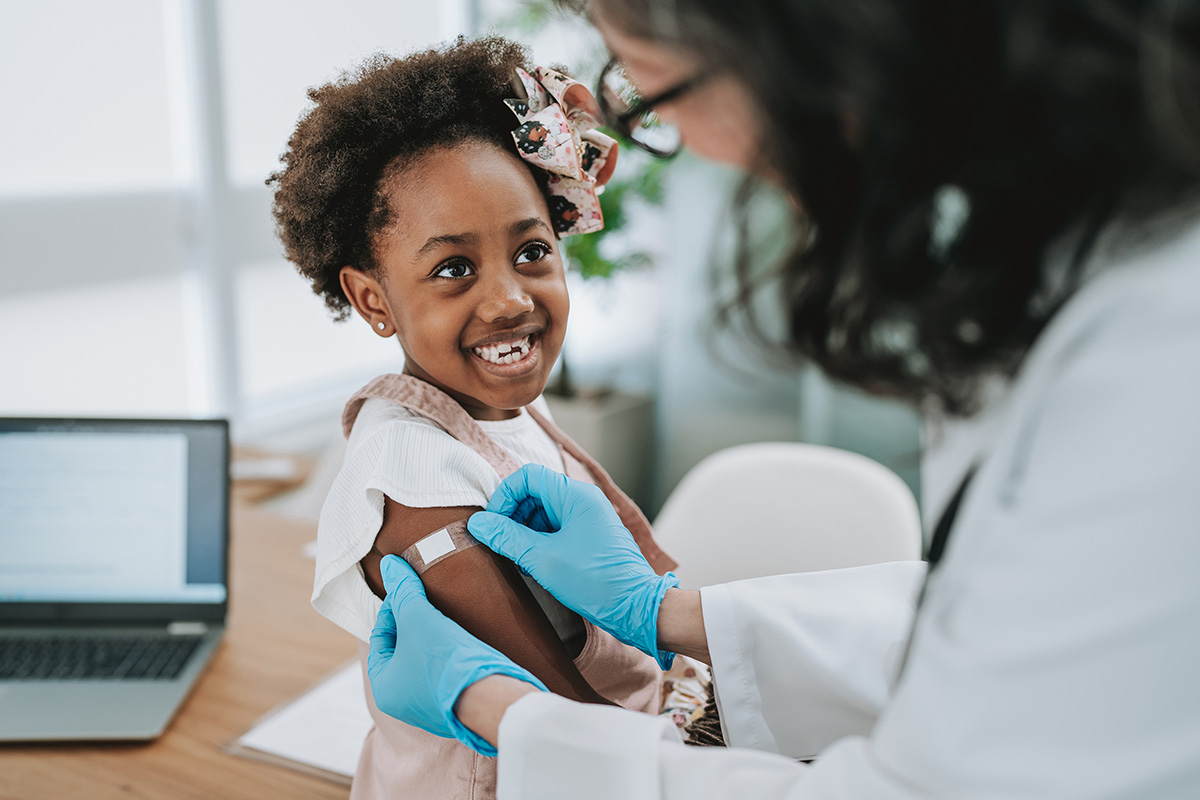
Pediatricians recommend children receive the measles-mumps-rubella (MMR) vaccine at 12 to 15 months and again at 4 to 6 years. Each dose of MMR lowers the risk of infection and the severity of illness for children who become infected.
- If you are unsure if your child is up to date with their immunizations, contact your pediatrician.
- The MMR vaccine is available through your CHKD pediatrician’s office. CHKD does not provide the MMR vaccine in our urgent care centers or emergency department.
We recognize that some parents are worried about getting their child vaccinated against measles. Several scientific studies have found no link between the MMR vaccine and autism. If you have questions about vaccine safety, please discuss your concerns with your child’s pediatrician.
Measles Symptoms
Children who have measles may have fever, rash, cough, runny nose, and red, watery eyes. Symptoms appear seven to 14 days after exposure. The rash usually begins three to five days after the first symptoms of illness. It first appears on the head and spreads to the rest of the body. Measles can cause complications such as ear infection, diarrhea, pneumonia, brain damage, and death.
- If you think your child has measles, please call your pediatrician.
- If you need to seek healthcare for your child, make sure to call your doctor’s office first.
How Measles Spreads
People who are infected may spread the virus to others four days before they develop a rash. Measles can spread when someone infected with the virus coughs or sneezes.
The virus can live for up to two hours suspended in the air or on a surface. You can become infected by breathing in contaminated air or touching contaminated surfaces and then touching your eyes, nose, or mouth. Measles is only spread by humans.
- Contact your child’s pediatrician immediately if you think anyone in your family has been exposed to the measles virus.
Measles Outbreaks
Measles outbreaks often spread in places where many unvaccinated people live. An outbreak is defined by three or more confirmed cases. In recent years, the percentage of children receiving the MMR vaccine has decreased, making it easier for measles to spread.
As of September 2, there have been 35 outbreaks reported this year with more than 1,430 confirmed cases in 42 states. More than half of these cases were in Texas.
Understanding Risks, Complications
While most children with measles get better, others may face serious complications such as pneumonia, swelling of the brain, deafness, and death. A measles infection can also cause immune amnesia, a phenomenon where the immune system “forgets” previously acquired immunity, affecting your child’s ability to fight off other infections. It can take years for the immune system to recover.