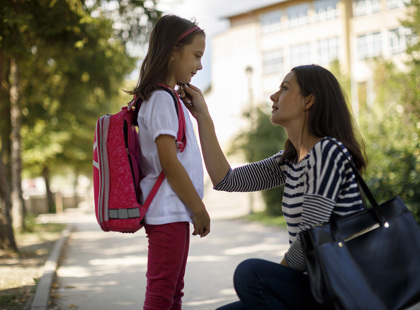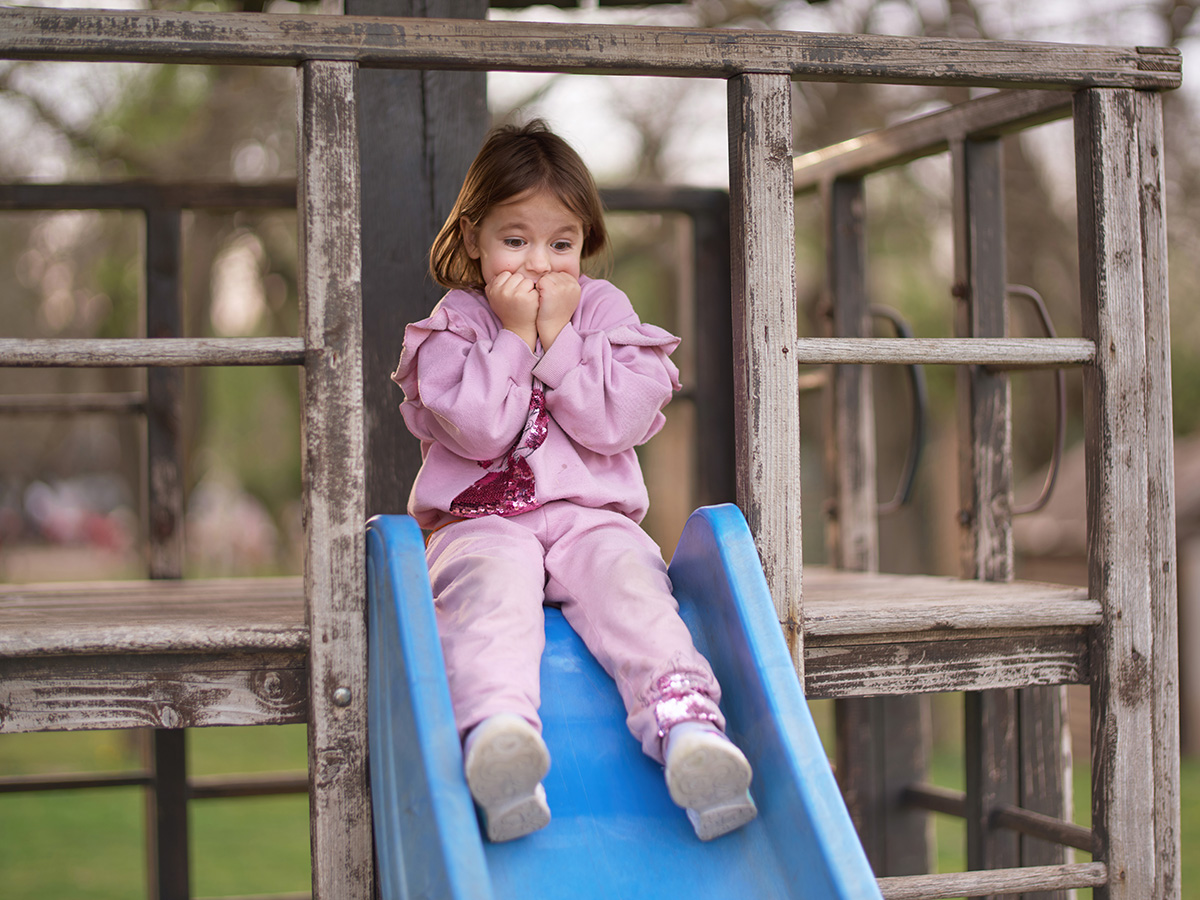
Stress is a normal and natural part of life. Stress occurs when the body faces a demand or pressure that it must respond to, either physically or mentally. For example, the demands of completing a homework assignment may cause a child to feel stressed. A stomachache or lack of sleep can make a child more susceptible to feeling stressed. Children can feel stressed by challenges and seemingly positive events, too, such as learning to ride a bike or welcoming a new sibling to the family. How we help a child successfully navigate stressful experiences is important and provides practice for the inevitable challenges they will face in the future.
I spoke with a friend last week who had gone with her daughter and 8-year-old grandson to a ropes course. When they were halfway through the course, her grandson was standing on a walkway made of boards suspended on ropes between two stable platforms several feet apart. About midway across the walkway, he looked down. He was 8 feet above the ground. He got nervous and stopped. He said, “I can’t do it.” The only way to reach a stable platform was to backtrack along the boards he had already navigated or to move forward, stepping on several more boards to reach the other side. His mother encouraged him, saying, “You can do hard things. Look how far you have already gone. You have a few more steps to go. Take it one step at a time. You are almost there.” With each step he took, she encouraged his effort. “Look, you are doing it! Slow and steady.” When he made it across the entire suspended walkway to “safer ground,” he was excited and proud. With her encouragement, he was able to cope physically and mentally with the challenge. He learned that he is capable and that it is okay to feel stressed and keep going. Some stress can be healthy. Facing challenging situations and events with support can foster growth and development and build confidence.
Stress can become unhealthy when demands and pressures overwhelm a child’s capacity to cope. Children look to parents, teachers, and other important adults in their lives for support and comfort when feeling overwhelmed. With the support of a caring adult, children can successfully cope with the demands of daily life and more.
The child on the ropes course drew strength from his mother’s encouraging words. The ropes course scenario would have ended differently if the mother had rushed the child or minimized his fear. When a child does not have support or encouragement, stress becomes distress, and the child’s growth, development, and sense of confidence can be negatively impacted.
If your child or student is struggling with pressure or demands, provide a balance of comfort and challenge. Consider these strategies:
Offer comfort by validating your child’s struggle. “I can see how hard this is.”
Reassure your child, no matter how hard the task or how difficult the situation. “I’m here for you, and I know we can get through this together.”
Challenge your child and build resilience by praising their effort. “Your practice is really paying off.”
Help your child organize their environment and prioritize tasks. Break difficult tasks into small steps.
Invest in their physical stamina by maintaining good sleep and eating habits.
Bodies need rest and activity.
Limit screen time to prevent overstimulation of the brain and nervous system.
Take brain breaks when feeling overwhelmed (e.g., stand up and stretch or get a drink of water while doing homework).
Spend time in nature. Stop and notice the sensations your five senses can tune into, such as feeling the sun on your face, listening to the rustling of leaves in the trees, or hearing waves crashing on the beach.
To learn more, register and attend a CHKD webinar, Children and Stress, on September 23 from 6:30 to 7:30 p.m.